Publication Details
pH Effects in the Electrochemical Reduction of CO at Cu Electrocatalysts in an MEA Cell Configuration
Mustapha Bello, John C Hendershot, Monsuru Olatunji Dauda, Junghyun Park, John C FlakeElectrochemical Society Meeting Abstracts 245, 37, 2201-2201
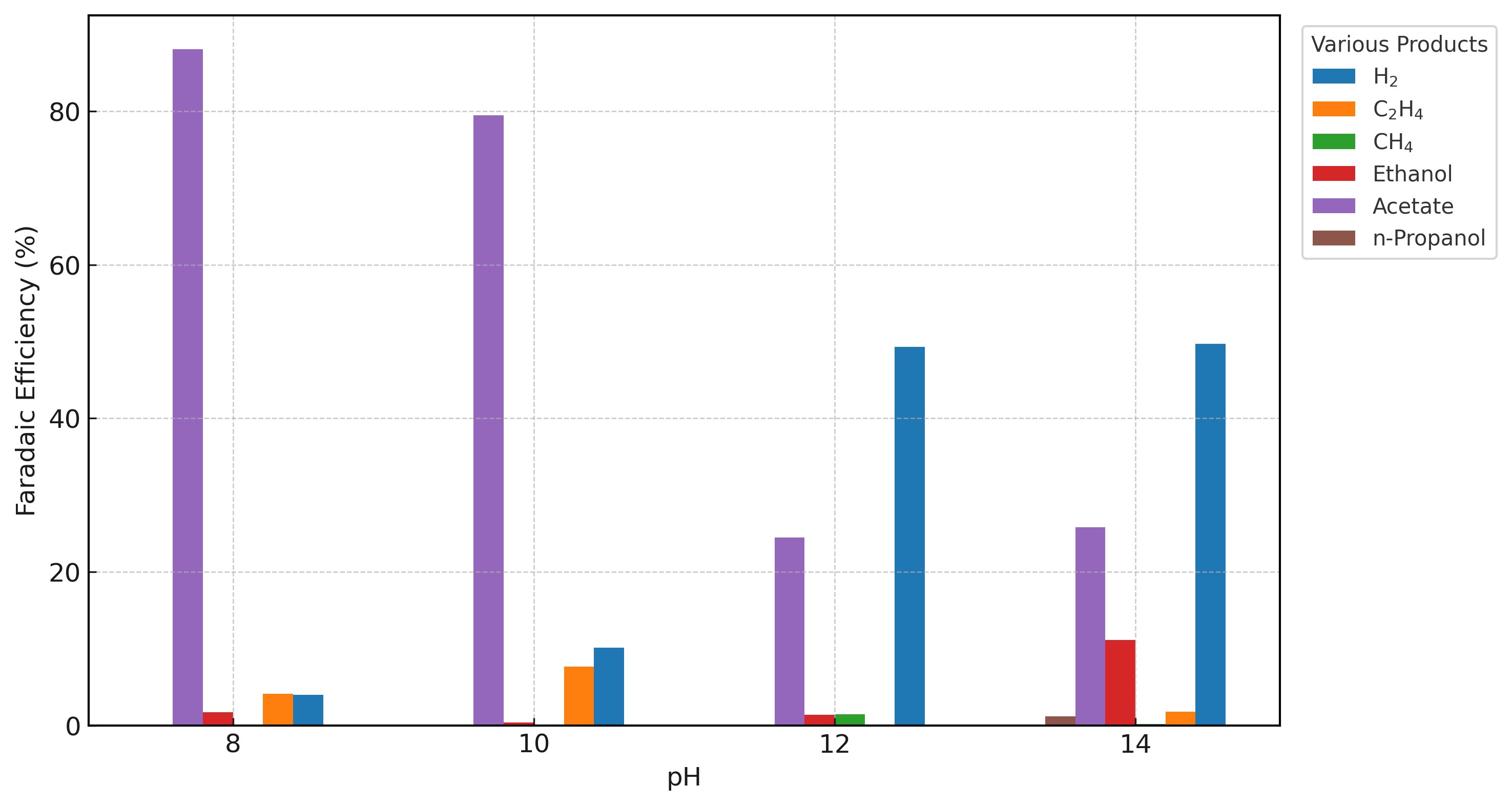
We explore the impact of pH and buffer on the electrochemical reduction of CO at Cu electrocatalysts in a membrane electrode assembly (MEA) cell. Anolytes included alkaline KOH solution with potassium hydrogen phosphate and potassium dihydrogen phosphate buffers with pH values ranging from 8 to 14. Results show near-neutral pH electrolytes enhance acetate selectivity. Figure 1 shows Faradaic efficiencies to acetate over 85% at a current density of 300 mA/cm². More alkaline electrolytes resulted in increasing HER along with coproduction of ethanol and n-propanol. Previous works have shown that ethylene production is enhanced at near-neutral pH values and other works have demonstrated that acetate is more favored in alkaline conditions, with ketene identified as a key intermediate. This study highlights the role of phosphate buffers in acetate selectivity at near-neutral pH. SEM, XPS, and XRD analyses show morphological and compositional changes in the Cu catalyst under different pH conditions. We propose that the phosphate buffers stabilize acetate precursors. Figure 1: Electrochemical performance measurement at different anolyte pH; Faradaic Efficiency of H2, C2H4, CH4, Ethanol, Acetate, and n-Propanol during CO electroreduction in a zero-gap MEA configuration at 300 mA*cm−2.